
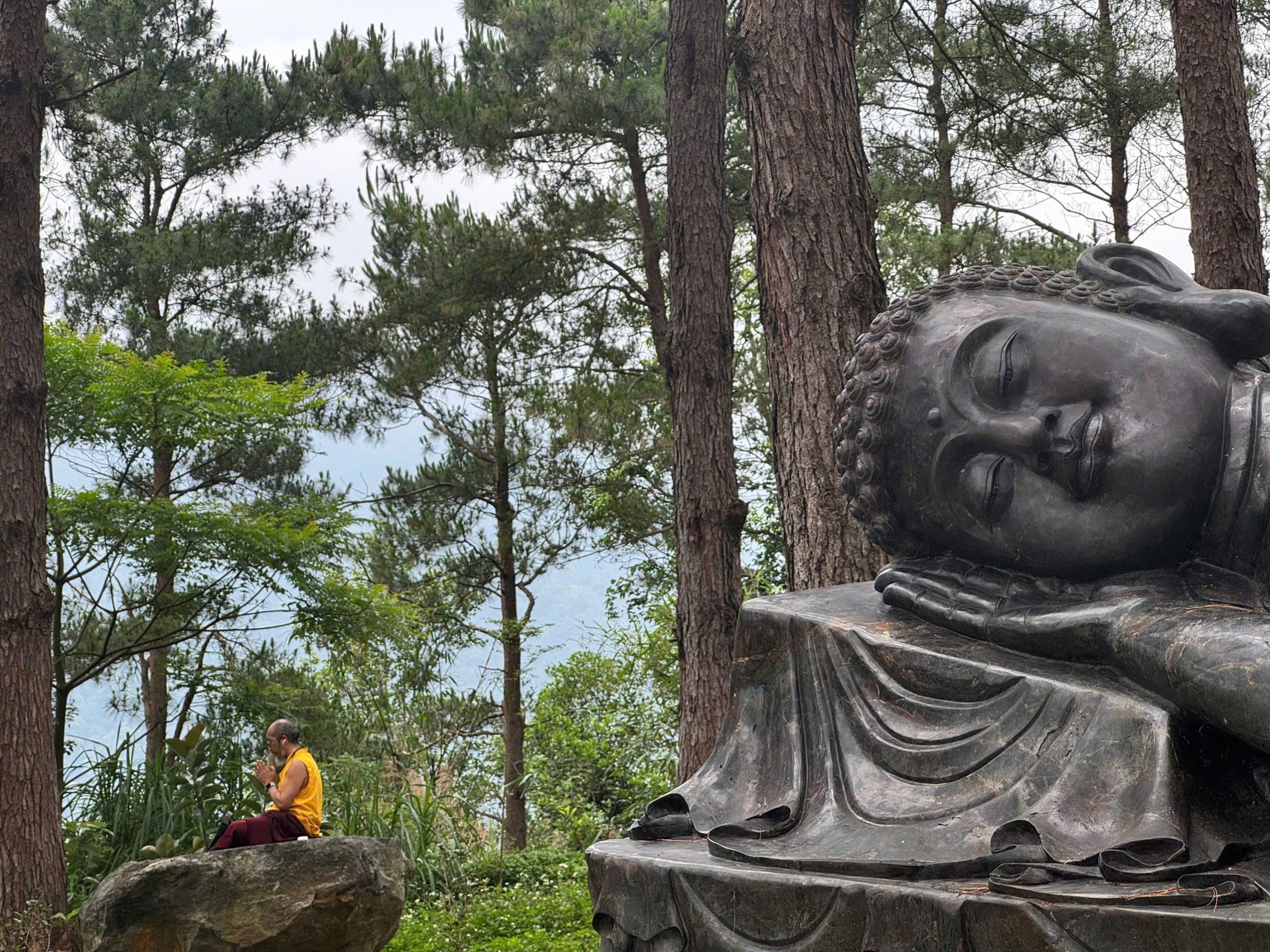
Shamatha Meditation with Ven. Dhammadipa

An Introduction to the Shamatha Meditation Course by Venerable Dhammadipa
This meditation course, led by the distinguished Buddhist scholar and meditation master Venerable Dhammadipa (Bhikkhu Dhammadipa), offers a comprehensive and deep dive into the practice of Shamatha (Tranquility/Appeasement Meditation) integrated with Bodhicitta (the Enlightened Mind). The course builds a strong bridge between the foundational, precise teachings of the Theravada tradition (such as the Abhidharma and correct differentiation of phenomena) and the non-dual realization prioritized in Mahayana and Vajrayana traditions.
Designed for serious practitioners who wish to explore the inner world thoroughly, the teachings emphasize that true religious practice and spiritual transformation are impossible without a solid foundation in concentration (Samadhi). Throughout the course, Venerable Dhammadipa systematically guides students through identifying internal obstacles, cultivating the foundational mental qualities of flexibility and pliancy, and practical methods for balancing mindfulness and relaxation. Ultimately, the course teaches practitioners how to calm the “monkey mind” and cultivate unconditional loving-kindness (Metta) toward themselves and all sentient beings.

Session 1: The Essential Foundation of Concentration and the Five Obstacles
The Crucial Core: Concentration (Samadhi) and one-pointedness of mind are highlighted as absolute necessities for examining the inner world and generating correct spiritual motivation. Without concentration, true mental transformation cannot occur.
The Five Hindrances Introduced: To find inner peace, practitioners must recognize and halt the five main mental obstacles:
Sensory desire (attachment to physical pleasures).
Ill-will (anger, resistance, and hatred).
Sloth and torpor (sluggishness or dullness of mind and body).
Restlessness and worry (anxiety and mental agitation).
Doubt (skepticism regarding the Triple Gem and the path).
Session 2: Original Luminosity of Mind and Countering Impurities
The Pure Nature of Mind: The mind is originally clear and luminous (pabhassara citta), compared to pure gold. Defilements are not inherent to the mind; they behave like passing “guests”.
The Three Impurities: Due to previous karma, defilements, and lifetimes, we accumulate deep impurities that prevent us from witnessing our mind’s pure nature.
Overcoming Obstacles: Shamatha functions to counter these obstacles using the five mental factors of the first jhāna (absorption). When combined with Vipashyana (Insight), obstacles turn into learning opportunities, allowing the practitioner to advance on the Bodhisattva path and care less for the self and more for others.
Session 3: Motivation, Differentiating vs. Non-Differentiating Wisdom
Theravada vs. Mahayana Lenses: Theravada aims for Arhatship by eliminating defilements through correct differentiation (understanding aggregates, elements, and dependent origination). Mahayana aims for full Buddhahood based on a non-dual motivation encapsulated by Bodhicitta—a mind that does not split self from others.
Transcending the World: To truly understand the world, one must develop the non-differentiating wisdom (Prajñāpāramitā) that transcends worldly dualities.
The 9 Stages of Shamatha: The 9 stages of calming the mind serve as the indispensable groundwork for understanding the reality of the mind and, subsequently, the reality of the world.
Session 4: Mental Pliancy and Flexibility as Foundations for Shamatha
The Power of Bodhicitta: In the midst of world suffering and war, practitioners cultivate Bodhicitta as the ultimate, supreme vow to lead all beings to liberation.
Alaya Consciousness: The session explores the repository consciousness (Alaya-vijñana), linking it to how habits and spiritual traits are stored.
Pliancy over Force: True meditation requires establishing mental lightness, flexibility, and softness (khinh an và nhu nhuyễn). Initially, holding onto a meditation object might cause stress, but the training teaches practitioners to gracefully move from forced will to a state of natural, effortless mindfulness (Sati).
Session 5: Taming the Monkey Mind with Mindfulness
The Analogy of the Monkey Mind: The restless, jumping nature of the ordinary mind causes continuous trouble, yet most people consider it normal.
Taming via the Banana Method: Just like a monkey in a cage holding onto a banana cannot be free until it lets go, our minds stay trapped because they rigidly grasp onto objects and thoughts.
Mindfulness Replaces Force: Progress happens when rigid, forced attention is systematically replaced by soft, continuous mindfulness. When mindfulness increases, stress and forced effort drop, allowing the mind to settle comfortably and naturally on its object.
Session 6: Practical Integration of Breath Meditation and Loving-Kindness (Metta)
Merging Faith and Wisdom: While Southern traditions focus heavily on conceptual philosophy, Northern/Tibetan traditions often emphasize experiential devotion. A profound faith, however, must rely on the clear realization of non-dual philosophy.
Dual Meditation Methods: Practitioners are instructed to balance their daily routines using two vital tools:
Shamatha: Focusing directly on the physical contact point of the breath to achieve one-pointedness.
Metta (Loving-Kindness): Utilized as a psychological “reset button” whenever tension or anxiety arises during breath work.
The Stages of Loving-Kindness: Based on Burmese monastic traditions, practitioners spend half their effort anchoring peace within themselves first, before sequentially expanding these wishes outward to loved ones, neutral people, difficult people, and eventually all sentient beings globally.