DDL Shedra Course
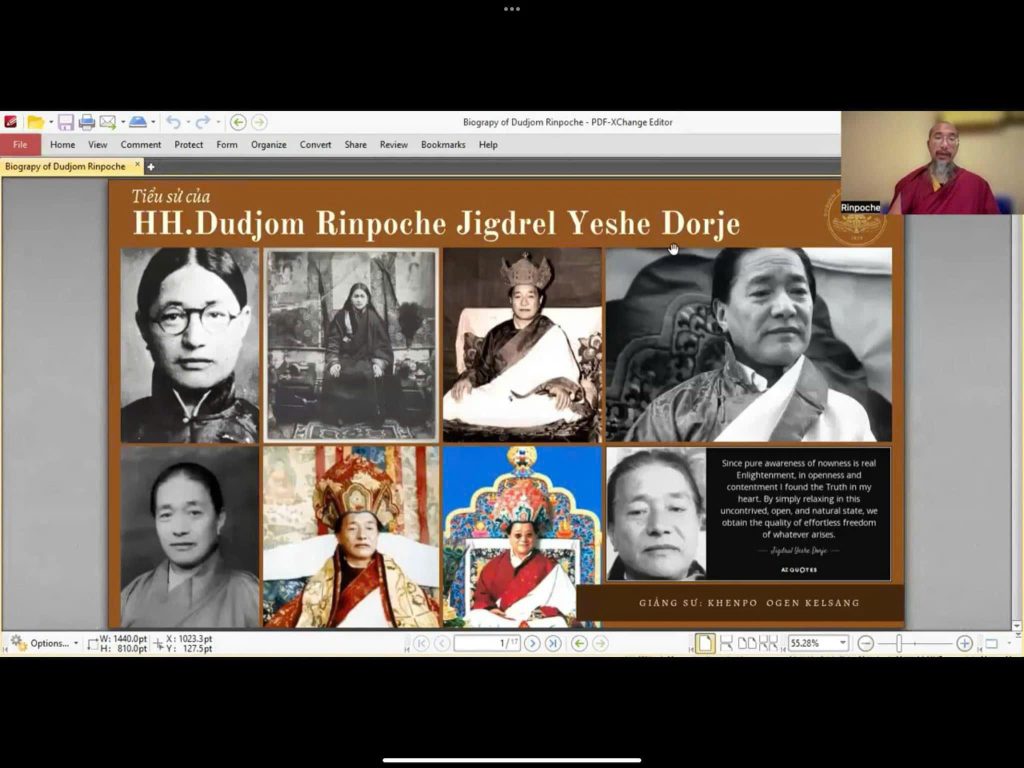
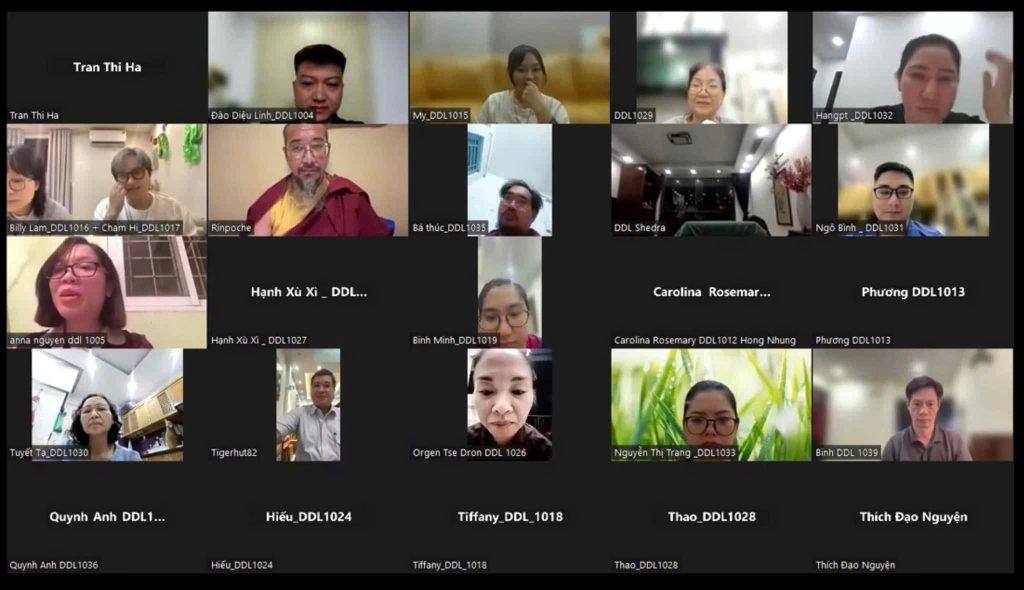
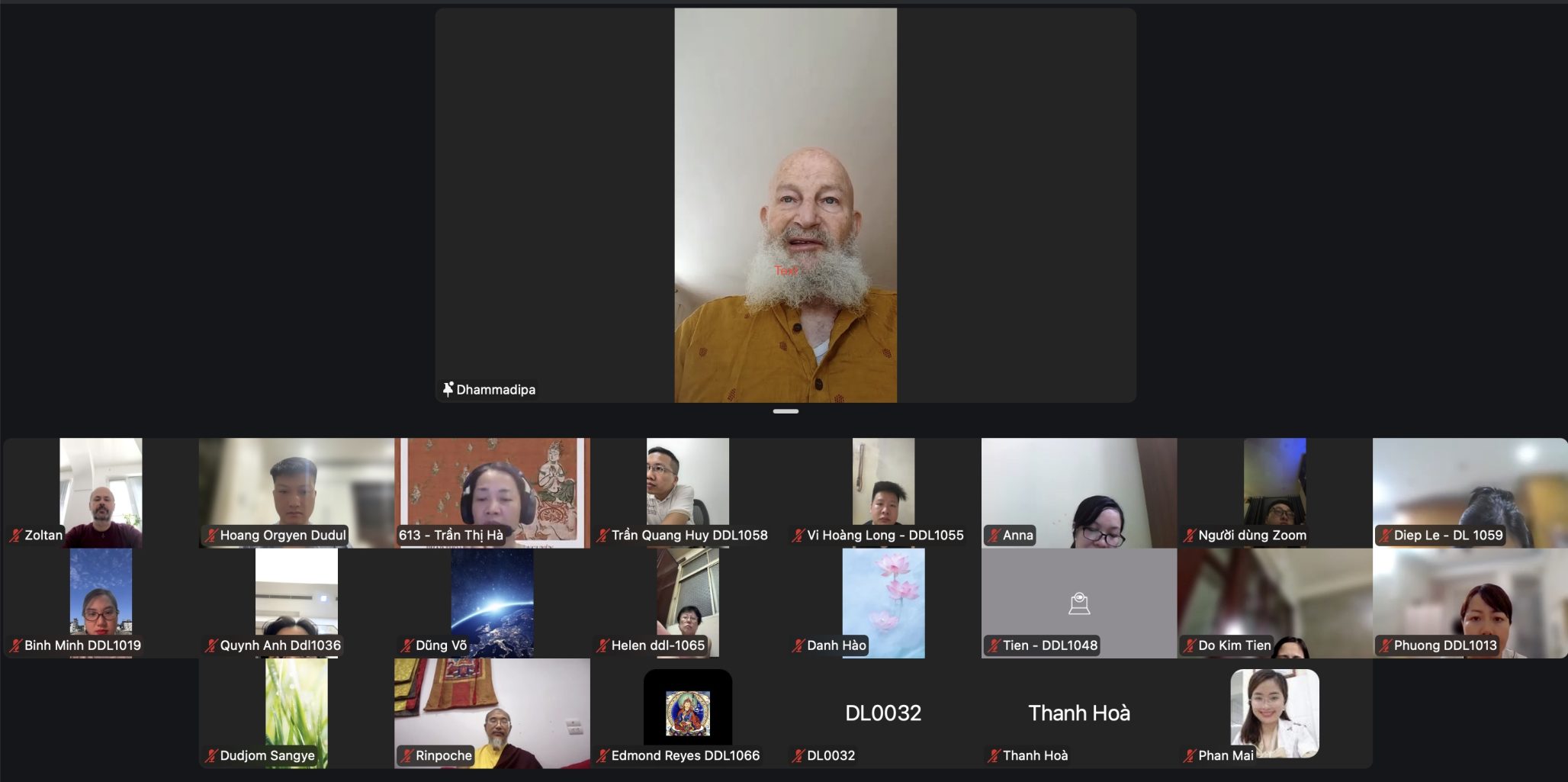
Khenpo’s primary goal is to build a translation and Dharma study community in Vietnam. With this vision, he founded the DDL Shedra in 2024, offering a four-year Buddhist study program open to Vietnamese people of all ages.
The long-term objective is to translate the collected works of H.H. Dudjom Rinpoche into Vietnamese and make them accessible to a broader audience.
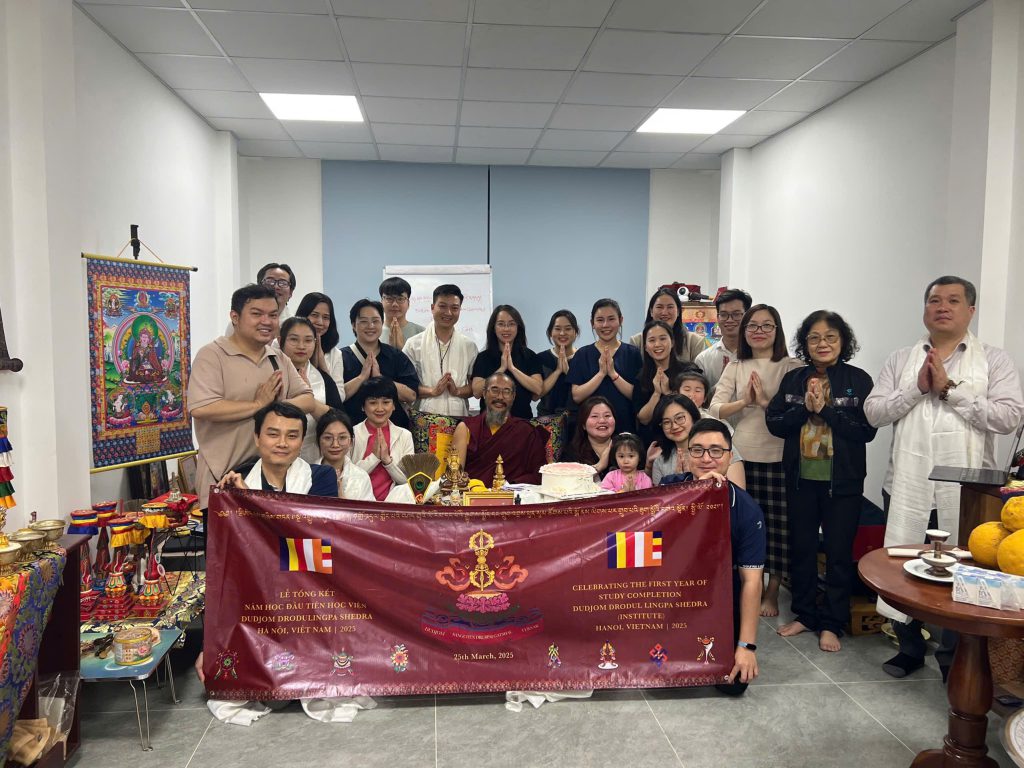
DDL Shedra: A 4-Year Journey of “Touching Enlightenment”
In the Tibetan Buddhist tradition, a Shedra is an intensive monastic college or theological institute where monastics and lay practitioners systematically study Buddhist philosophy, scriptures, and foundational commentaries. Initiated in 2024 under the direct guidance and compassionate teaching of Khenpo Ogel Kalsang, the DDL Shedra—themed “Touching Enlightenment”—is a rigorous 4-year curriculum designed to build a profound framework of spiritual knowledge through the stages of hearing, contemplating, and meditating.
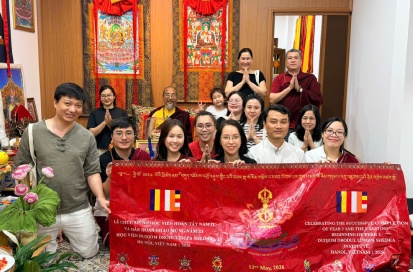
As of 2026, the students have successfully crossed the halfway mark, completing their second year of study. Over these past two years, practitioners have immersed themselves in three monumental texts.
The First Two Years and the Three Completed Texts
Year 1 (2024): Laying the Spiritual Foundation During the inaugural year, Khenpo Ogel Kalsang guided the class through two vital works to instill deep devotion and define the core path of accumulation:
“The Praise to the Three Jewels” (Kinh xưng tụng Tam Bảo): This text helps practitioners understand the profound qualities and enlightened attributes of the Buddha, Dharma, and Sangha. It establishes an unshakeable faith and a proper understanding of Refuge—the essential gateway to the Buddhist path.
“The Treasury of Precious Qualities” (Yonten Dzod by Omniscient Jigme Lingpa): A masterpiece that outlines the entire Buddhist path. Year 1 focused on the foundational Sutrayana teachings, including the four thoughts that turn the mind away from samsara, the law of karma, the cultivation of Bodhicitta (the mind of enlightenment), and the practice of the Paramitas.
Year 2 (2025 – 2026): Elevating Philosophical Distinctions
“The Gateway to Knowledge” (Khenjug by Jamgön Mipham Rinpoche): This text serves as an encyclopedia of Buddhist philosophy. It equips practitioners with the analytical tools needed to understand the structures of reality and the mind, dismantling the illusion of a solid, independent “self.”
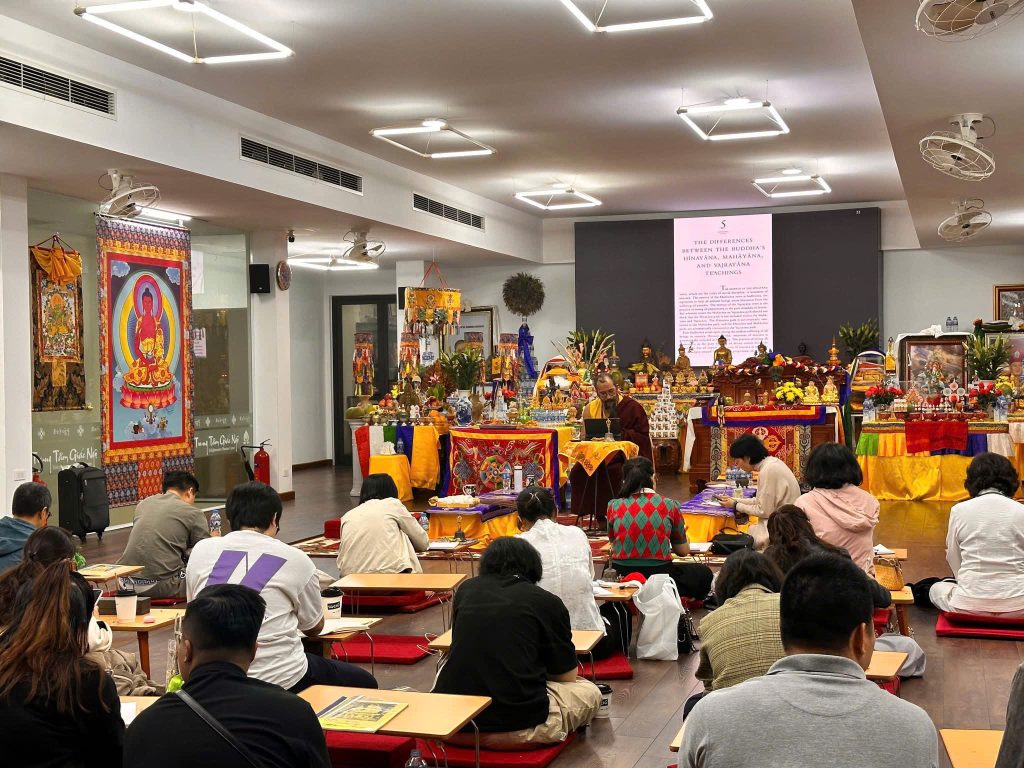
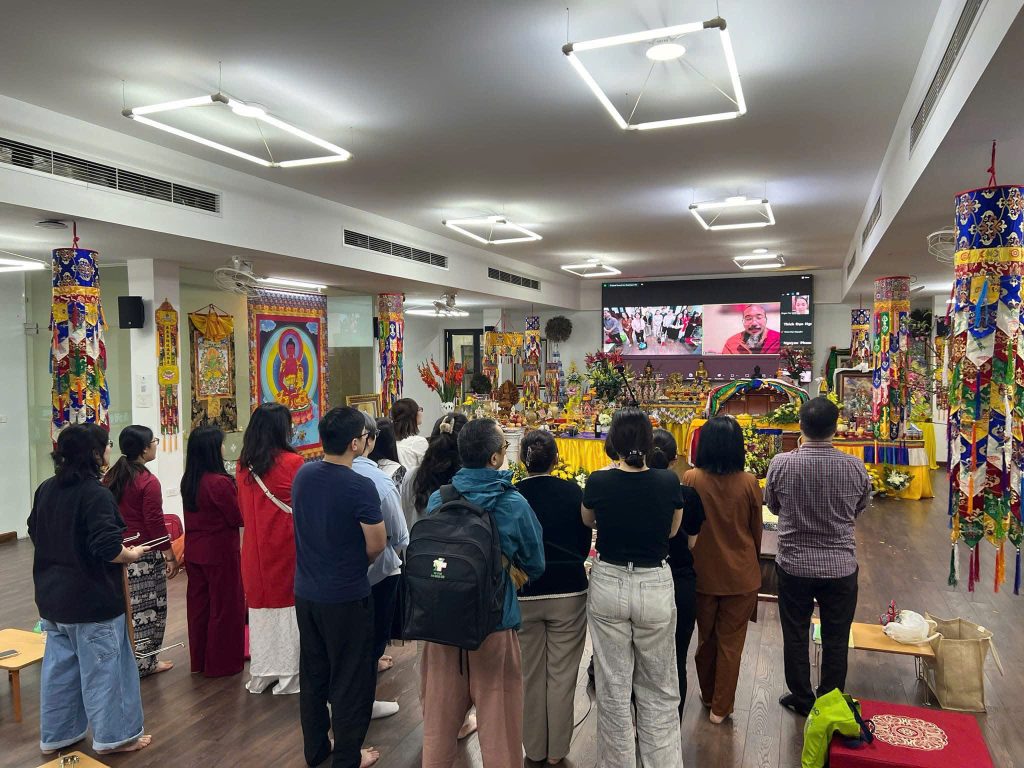

Core Content Summary of the Shedra Curriculum (The 23 Essential Books/Chapters)
To provide a comprehensive view of a traditional Shedra curriculum—such as the one being uncovered in this course—the structural themes of these masterworks can be summarized into 23 essential subjects, chapters, or books:
Phase I: Foundation of Faith and Refuge
The Praise to the Three Jewels: Elaborates on the omniscient qualities of the Buddha, the liberating nature of the Dharma, and the stainless virtues of the Noble Sangha.
Refuge and Bodhicitta: Detailed instructions on establishing the ultimate refuge and generating the supreme motivation of Bodhicitta to liberate all sentient beings.
Phase II: The Four Mind-Changing Teachings (Sutrayana Basics)
The Precious Human Rebirth: Contemplating the extreme rarity and immense potential of a human life to avoid wasting time on trivialities.
Impermanence and Death: Cultivating the awareness that all conditioned phenomena are in constant flux, thereby severing attachment to worldly life.
The Law of Karma (Cause and Effect): Understanding the infallible cosmic law of actions and their consequences to naturally adopt virtue and abandon negativity.
The Defects of Samsara: Recognizing that all six realms of cyclic existence are inherently bound by suffering, which triggers a powerful urge for renunciation (renouncing worldly cyclic existence).
Phase III: The Philosophical Framework of Reality (From “The Gateway to Knowledge”)
The Five Skandhas (Aggregates): Analyzing Form, Sensation, Perception, Mental Formations, and Consciousness to realize that a person is merely a shifting collection of parts, devoid of an inherent “I.”
The Twelve Ayatanas (Sense Bases): Studying the interaction between the 6 sense organs and the 6 external objects to understand how our perception of the world is formed.
The Eighteen Dhatus (Elements): Delving deeper into the constituents of experience by categorizing the sense organs, their corresponding objects, and the resulting consciousnesses.
The Twelve Links of Dependent Origination: Tracing the chain of causation from Ignorance (avidya) to Old Age and Death, revealing exactly how the wheel of samsara spins and how to break it.
The Four Noble Truths: Examining the deep philosophical and experiential dimensions of Suffering, its Origin, its Cessation, and the Path.
The Twenty-Two Faculties (Indriyas): Exploring the dominant forces that govern physical life, sensory experience, mental activity, and spiritual progression.
Phase IV: The Practice of the Six Paramitas (Perfections)
Generosity (Dana): Letting go of attachment by sharing material wealth, teaching the Dharma, and offering protection from fear.
Discipline (Shila): Maintaining ethical purity and protecting one’s vows as the steady foundation for meditative concentration.
Patience (Kshanti): Cultivating a mind that remains undisturbed by hardships, anger, or malicious harm caused by others.
Diligence (Virya): Awakening a joyful, tireless enthusiasm for practicing the Dharma and gathering virtue.
Meditative Concentration (Dhyana/Shamatha): Training the mind in one-pointedness, pacifying mental agitation to achieve perfect inner balance and stillness.
Wisdom (Prajna/Vipashyana): Directing the pacified mind to discern emptiness (Shunyata) and the ultimate nature of reality, completely uprooting primordial ignorance.
Phase V: Vajrayana and the Great Perfection (From “The Treasury of Precious Qualities”)
Introduction to the Secret Mantra Vehicle: Understanding the unique, swift path of the Vajrayana and the importance of maintaining pure perception (daknang).
Guru Yoga (Reliance on the Spiritual Friend): The vital practice of aligning and merging one’s own mind with the enlightened mind of the Guru to receive direct blessings.
The Tantric Samayas: Keeping the sacred commitments, vows, and pledges of the Vajrayana, which act as the life-force of spiritual accomplishment.
The Generation and Completion Stages (Kyeryim and Dzogrim): Methods involving deity visualization (Mandala) and working with the inner subtle body systems of winds (lung), channels (tsa), and essences (thigle).
The Great Perfection (Dzogchen): The pinnacle of all teachings; directly introducing the primordial, naturally pure nature of the mind—resting in effortless, self-liberated awareness.
Then
DDL Shedra – “Touching Enlightenment” is far more than an academic pursuit. It is a comprehensive spiritual roadmap. Celebrating the completion of the first 2 years marks a profound milestone, preparing a resilient, highly trained sangha ready to receive the even more advanced and esoteric transmissions during the final 2 years with Khenpo Ogel Kalsang.